



This article was deleted from the WordPress site. It is restored from the Internet Archive copy of November 13, 2013.
Android: Netrunner is an amazing game, but one currently lacking any kind of limited formats similar to drafting or sealed deck in Magic: the Gathering. Anthony and I spent some time thinking about how a drafting format would function with a Living Card Game like Netrunner and eventually found a solution that so far has been incredibly fun.
The format we settled on was a cube-esque draft that ignores influence, allowing you to play with any drafted cards. Currently, with one core set and one of each data pack you can create your own Netrunner Cube that allows drafting with four people.
Imagine looking at a draft pack like this:
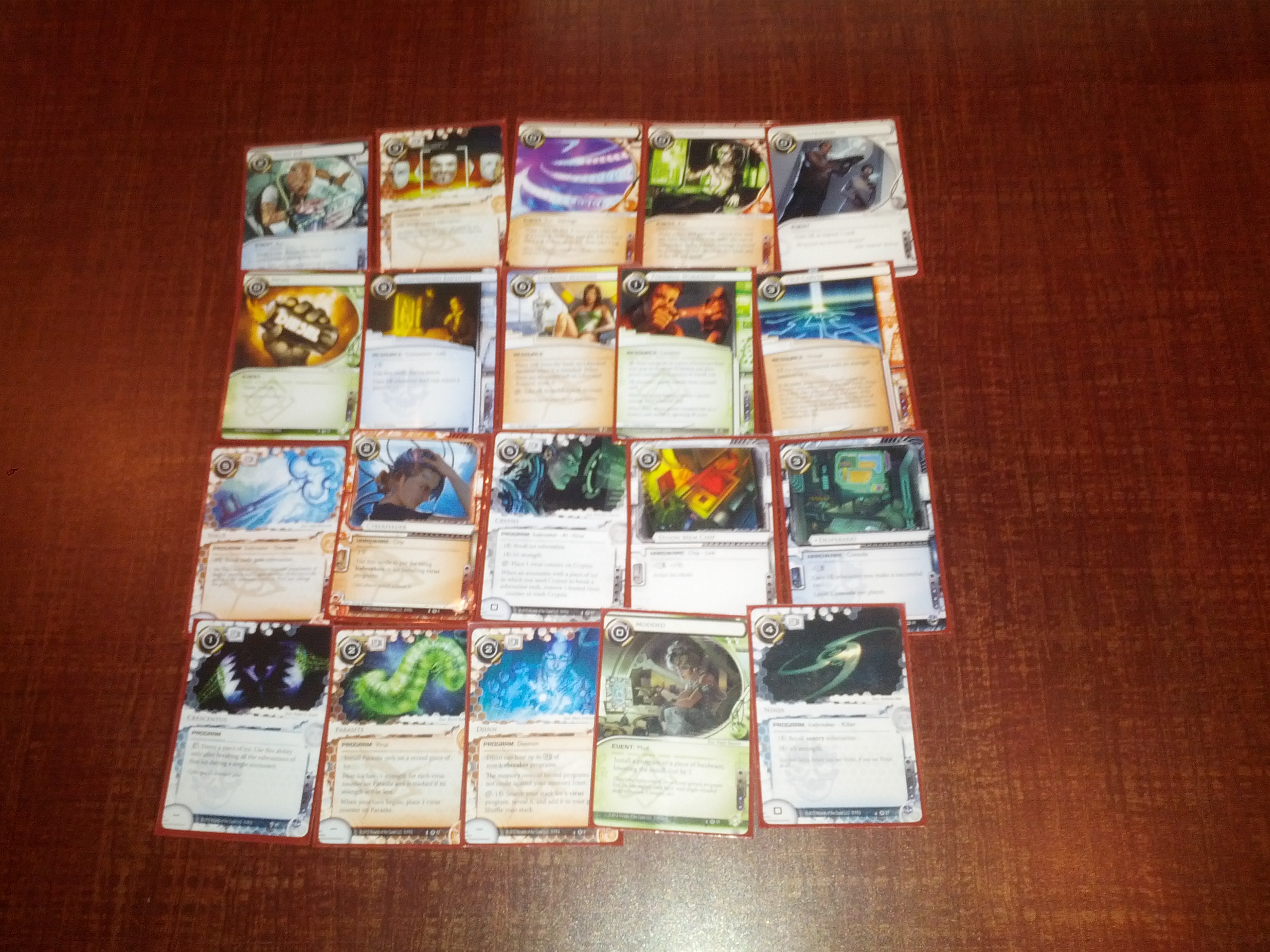
What card would you take for your deck?
How does it work?
To create the cube take one core set and combine it with one copy of each data pack currently available. After removing all identities, separate the corporation and runner cards into two separate randomized stacks.
Sit all four players around a table and give them each 3 randomized corp “packs” of 20 cards from your corporate stack. Players will then draft their packs going left-right-left until all three packs have been drafted. Players then repeat this process with 3 randomized runner “packs” of 20 cards , this time alternative right-left-right.
After all packs have been drafted, each player will make a runner and corp deck with the cards that they drafted. Influence and factions are ignored, any card you drafted is legal to play in the appropriate deck (however still no putting runner cards in corp decks or vice versa).
Each player is assumed to have a generic neutral identity that has a 40 card minimum deck size. Alternatively you can put one of each identity into the draft for people to pick as well, or do a separate identity draft of only identities before drafting other cards, but we do not advise this for your first drafts.
While we found it unnecessary, we created an optional rule that allowed anyone without enough agenda points to fill the remaining needed agenda points with proxy agendas that count as 2 points 4 cost with no abilities.
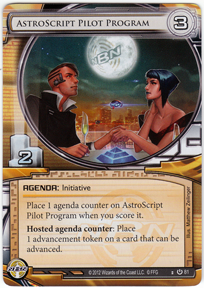
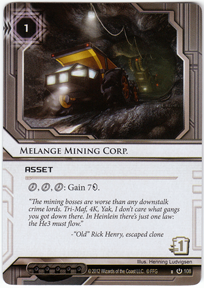
Once everyone’s deck is constructed, sit down and play some of the strangest yet most exciting games you will ever play in Netrunner. Drafting Netrunner is both incredibly difficult and highly entertaining. Thinking about the choice of AstroScript Pilot Program or a Project Atlas or even one of the three Hedge Funds can be incredibly difficult. It is very challenging to try and figure out when you need agendas and how highly you should take them in comparison to both economy cards and ice. Add in the limitations of a core set, do I draft the 1-of SanSan City Grid, or take a more consistently good but more available card like Ice wall or Ichi? Do you take one of the two Astroscript Pilot Programs to give your deck the best agendas, or do you take one of the few Melange Mining Corps to really fuel your economy? All of the choices are incredibly difficult and reward player experience significantly. Here are deck lists and commentary from our most recent draft for your amusement.
Player: Anthony Giovannetti
ID: Jinteki (Personal Evolution)
Agendas:
Restructured Datapool
Private Security Force
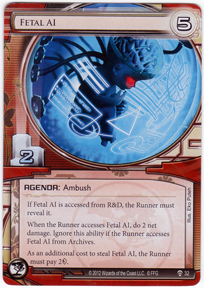
2 X Fetal AI
2 X Project Atlas
Accelerated Beta Test
Nisei MK II
False Lead
Hostile Takeover
Posted Bounty
Breaking News
ICE:
Archer
Wall of Thorns
2 X Sherlock
Uroboros
Cell Portal
Ichi 1.0
Data raven
2 X Neural Katana
Enigma
2 X Wall of Static
Shadow
Caduceus
Chimera
Snowflake
Chum
Hunter
2 X Popup Window
Assets:
2 X Dedicated Server
Adonis
Private Contracts
2 X Melange Mining Corp
Upgrades:
RedHerrings
Chilo City Grid
Operations:
2 X Biotic Labor
2 X Neural EMP
Psychographics
SEA Source
Archived Memories
Asroybal Commentary:
Wow, Anthony pulled both of the mining corps in the cube. I assume he took them both very early and tried to set himself up to use them. Having a number of 3/2 or faster agendas is great and I think is the reason he picked up the Jinteki identity later, it also makes the neural katanas that much scarier. Generally I think this deck is quite strong, although, some of the ice is not exactly what you are looking for. With the inclusion of a cell portal and archer I feel like a sunset or 2 would have really helped this deck out.
Anthony Commentary:
I tried to have a small tag/trace package to give ICE like Hunter some additional kick in my deck as well as making the Restructured Datapool more relevant. I was overall pretty happy with this deck. Sherlock is better in draft than in traditional Netrunner, and I had one of the better economies with both of the mining corps and my other money assets. I agree that a singleton Sunset would have been useful.
Player: Anthony Giovannetti
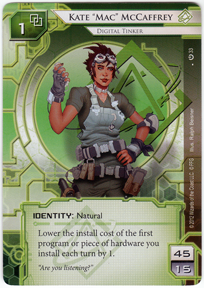
ID: KATE
Programs:
Snitch
Snowball
Magnum Opus
Wyrm
Yog.0
ZU.13 Key Master
Corroder
Ninja
Crescentus X 2
Hardware:
Desperado
Dyson Mem Chip
Akamatsu Mem chip
Cyberfeeder
Rabbit hole
Resources:
The Helpful AI X 2
Ice Carver
Decoy
Crash Space
All Nighter
Personal Workshop
Scrubber X 2
Access to Globalsec
Public Sympathy X 2
Liberated Accounts
Underworld Contacts X 3
Compromised Employee X 2
Events:
Diesel X 3
Special Order X 3
Infiltration
Inside Job
Emergency Shutdown
Vamp
Notoriety
Deja Vu
Asroybal Commentary:
This deck is a very solid indication of the style of runner Anthony likes to play. Super aggressive with 3x diesel, 3x special order, and some compromised employees to go with his desperado he can run early and frequently to punish bad corporation draws of his opponents. I like the inclusion of the underworld contacts to give himself an economy throughout the game.
Anthony Commentary:
I tried to focus on consistency when building my runner deck. I valued tutor and card draw effects very highly, allowing me to get more value out of my singleton breaker suite. Additionally early on I decided to try and get an underworld contacts economy going to make link more valuable for me. I assumed that most people would have to run some kind of trace ICE that I could use link on.
Player: Alex Rockwell
ID: Whizzard
Programs:
Femme Fatale
Mimic
Pipeline
Corroder
2 X Morningstar
Peacock
Force of Nature
Crypsis
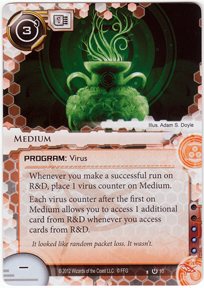
2 X Medium
Parasite
Imp
Djinn
Sneakdoor Beta
Crescentus
Hardware:
2 X Dinosaurus
Akamatsu Mem Chip
Dyson Mem chip
Cyberfeeder
Cortez Chip
Events:
Account Siphon
2 X Emergency Shutdown
Vamp
Inside Job
2 X Stimhack
2 X Tinkering
infiltration
Notoriety
Modded
Resources:
Personal Workshop
Liberated Accounts
Armitage Codebusting
Crash Space
Scrubber
The helpful AI
2 X access to globalsec
2 X Sacrificial construct
Asroybal Commentary:
If ever there was a person who liked medium, that person is Alex. I assume Alex took mediums early as I never saw one passed. Utilizing the fixed strength ice breakers and dinosaurus is a strong synergy in Netrunner limited and Alex drafted mimic and morningstars to fill that Dino well. I do not think access to globalsec is particularly strong but you were only allowed to cut 7-8 runner cards from your deck if you play an identity nowadays (since the card pool is so small). Also, Whizzards ability and scrubber means nothing is safe from trashing ever. In general I think this deck is strong but lacks for a strong economy later.
Anthony Commentary:
This deck made very good use of Whizzard’s identity with Medium to dig deep and fast. Whizzard in general is actually quite strong in this format as almost everyone will have assets worth trashing. Alex had lots of different breakers to help give him resiliency and consistency instead of focusing on tutors or card draw.
ID: HB
Agendas:
2 X Government Contracts
Executive Retreat
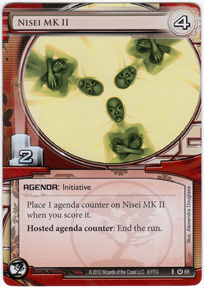
2 X Nisei MK II
Project Atlas
2 X Hostile Takeover
Breaking News
Braintrust
ICE:
Archer
2 X Tollbooth
Sherlock
Data Raven
Neural Katana
2 X Caduceus
2 X Viper
Shadow
3 X Matrix Analyzer
2 X Draco
Popup Window
Datamine
Assets:
2 X Adonis Campaign
3 X Pad campaign
Private Contracts
3 X Encryption Protocol
2 X Chilo City Grid
Akitaro Watanabe
Experiental Data
Aggressive Secretary
Operations:
Biotic Labor
Anonymous Tip
Power Grid Overload
Psychographics
Scorched Earth
Closed Accounts
Freelancer
Asroybal Commentary:
Again, this deck seems to be lacking economy; however, Alex pulled the HB identity. As such, he does not have need for as many economy cards. Alex likes to play quite a few face down remote cards. I am not surprised by the inclusion of chilo city grid, but I do not think it is a particularly strong choice. If I drafted the first pick HB identity I think my draft focus would be a bit more ice heavy than this.
Anthony Commentary:
The HB identity is just simply too good. It gave Alex most of the economy he needed. Alex probably had the best agenda composition, and that allowed him to apply pressure very quickly.
Player: Anthony Roybal
ID: Noise
Programs:
2 X Datasucker
2 X Parasite
2 X Nerve Agent
Crypsis
Djinn
2 X Aurora
Snowball
Yog.0
Gordian Blade
Femme Fatale
Hardware:
2 X Plascrete Carapace
Dinosaurus
Grimoire
The toolbox
Cyberfeeder
2 X Lemuria Codecracker
Dyson Mem chip
E3 Feedback Implants
Resources:
2 Armitage Codebusting
2 X Wyldside
Joshua B.
Aesops Pawnshop
Personal Workshop
Compromised Employee
Events:
2 X Satellite Uplink
Tinkering
Deja Vu
Modded
Easy Mark
Test Run
Account Siphon
Forged Activation Orders
Stimhack
Demolition Run
Asroybal Commentary:
I was relatively happy with how this draft went. This is the second time I drafted Noise and I think the card quality in this deck was quite a bit higher than last time. I had 2 battering rams but ended up running auroras because I was afraid of the memory. I also think this style of deck suits my play style more than any other. It is not interactive and plays the game at its own pace (something I enjoy immensely). This actually started as a Chaos theory deck but when I didn’t get the dinos I ended up not being able to play the Battering rams and then all of the viruses started to flow during pack two. I picked up a grimoire for efficiently costed memory early pack 2 and then Noise tabled 3-4 times in pack two before I picked it up (grabbed all the viruses first). With Aesops and personal workshop in addition to some economy cards I felt this deck was strong.
Anthony Giovannetti:
There is only one pawnshop in the entire draft, so picking that up was huge for Roybal’s deck. Even though he can only get so many Noise mills with this deck, those extra mills were often enough to earn at least one additional agenda, making this a scary deck indeed. The three of us who submitted decklists all ended up with one of the three personal workshops, and it really is a first pick card. When your deck is inconsistent the workshops can help to smooth things out and allow you to draw aggressively.
ID: Weyland Consortium (original)
Agendas:
3 X Mandatory Upgrades
2 X Astroscript Pilot Program
Accelerated Beta Test
Project Vitruvius
Priority Requisition
Executive Retreat
Assets/upgrades:
3 X Ash
3 X Marked Accounts
2 X Amazon Industrial Zone
Red Herrings
Private Contracts
Operations:
3 X Hedge Fund
3 X Beanstalk Royalties
2 X Commercialization
ICE:
3 X Ice Wall
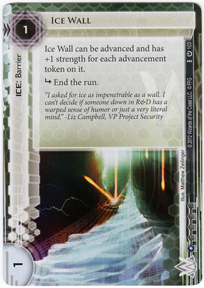
2 X Hadrian’s Wall
Wall of thorns
2 X Tyrant
Wall of static
3 X Hourglass
Sensei
Viper
Enigma
2 X Janus
2 X Ouroboros
Woodcutter
Ichi
Chimera
Asroybal Commentary:
With the Weyland deck, I started with Astroscript Pilot Program first pick then I was passed a second Astroscript pilot program immediately. I ended up grabbing early hedge funds and beanstalks as quick burst economy cards and later ended up with the playset of both. I drafted Janus a couple times hoping to wheel the oversight A.I.’s to go with them but that did not happen and I was unable to draft enough good ice so I had to play tyrant and woodcutter. In general I feel this deck was very close to good, but missed on a few key cards to function well.
Anthony Commentary:
This deck was probably the weakest of the corp decks, however it did have a few things going for it. 3 Ice Wall plus 3 hedge fund and 3 beanstalk makes for a very good core to build around, ensuring that Anthony would have a strong economy while having cheap ice to defend himself early. Anthony also has both of the astroscripts in the cube, and those single handily make his deck significantly stronger. The biggest problem I see with this deck are the mandatory upgrades, which seem particular hard to score in draft. Anthony’s deck could have used some additional cheap and easy to score agendas, and is a little bloated with hard to score agendas for me.
Asroybal Overall Comments:
So, what are the keys to drafting good decks? For runner I would say supporting solid aggression is quite strong but you also want to pick up a lot of economy cards in any deck because they allow you to actually play your breakers reasonably fast. For corporation I would say pick up strong ice and economy in general. You can score bad agendas if your ice is good enough and you are not poor.
Moving forward, I would suggest removing identities from the draft pool and drafting them separately before the rest of your draft. Other than that I found the format to be very entertaining and suggest it as an alternative way to play Netrunner for those who enjoy it as whole-heartedly as we do.
This draft has incredibly fun, and I’d recommend netrunner cube to anyone who anyone who likes to draft. It was probably the most fun I’ve ever had playing netrunner. The power level is moderate and the decisions are interesting. I really like mid power level netrunner, since it all feels very balanced, and it can be very viable to stick an agenda in play and advance it and say go. There is no dominance of fast advance strategies.
You can play tricks in your deck and your opponent will have no idea what they are, since there are no influence restrictions. You just have to value them high enough to draft them.
You have to decide whats better: The 3/2 agenda? The Mining Corp? The Tollbooth? This really tests your card evaluation skills!
I hope this catches on, and people start playing netrunner cube draft. Its amazing.
This sounds really cool. Does it work 2p?
You could do two people but you would probably want to change to a drafting style like Rochester for two people.
Something like this would work well: https://www.wizards.com/Magic/Magazine/Article.aspx?x=mtg/daily/ld/175
For 2 people drafting, in Netrunner, I think you shouldn’t do any form of ‘face up’ drafting.
If you can see the snares and the junebugs go into their deck, thats going to take away part of the surprise.
Part of whats cool about the netrunner cube draft is that their deck could have anything in it, but only things they managed to draft. If their goal was to hit you with traps and they chose them highly to allow that, you shouldnt know about it, unless you managed to deduce it from the cards you saw.
After some research, I think the following “Pancake draft” method would probably be best for 2 players:
http://blog.garion.org/2013/03/21/pancake-draft-cube-draft-for-two-players/
Basically, in each selection, you are picking a couple cards, and throwing away a couple cards face down. The opponent then gets the remainder and isnt sure which you took and which you discarded.
Therefore, you could draft the snares and throw away something else good. Or you could draft the other cards and throw away the traps. Now your opponent doesnt know which it is.
The only issue with this is that since youre throwing half the cards away, that means you need to draft the whole (4 player) cube for 2. Which means that all of the 3/2 agendas will be in there, and if you are both picking those and not throwing them away, you might both have these super powered agenda mixes of ten 3/2 cards. So some tweaking should be done to fix this.
After looking at Pancake drafting I agree this should work well for two players. Will try and test this out ASAP.
How strong is the drafting strategy when there’s no restrictions? An important part of MTG drafting is signaling, but if there’s no influence restriction, can you really catch signals in this format?
Its not about signalling, its about card evaluation, drafting synergistic cards, and not ignoring any of the important aspects of building a netrunner deck.
Signalling is only a thing in magic drafting because of the color restrictions.
But we do have identity restrictions in ANR which functions similarly to colors, do you think it’s worthwhile to incorporate them in this format?
No I dont think so. It results in everyone just having to take all the cards of their color. This is a 4 person cube and you all get only 1 color. In magic its an 8 person draft and you get two.
Also, if 4 people draft three runner colors, then two of them get a solo color, and two get wrecked. It doesnt work at all.
But drafting without influence restrictions was perfect.
I was discussing drafting for ANR and someone mentioned the potential for “hate drafting”. For example, drafting all icebreakers of a certain type to make its ices more effective.
Have you had any success with such strategies?
We haven’t tested too much yet unfortunately. But that is something I want to experiment with more. Thus far it hasn’t been a problem.
(This is also why things like Crypsis are so valuable and make for high picks.)
Can you explain this part:
“Sit all four players around a table and give them each 3 randomized corp “packs” of 20 cards from your corporate stack. Players will then draft their packs going left-right-left until all three packs have been drafted. Players then repeat this process with 3 randomized runner “packs” of 18 cards (currently there are not enough runner cards to do 20 card packs), this time alternative right-left-right.”
in full detail as though to a child that has never drafted anything, Magic or otherwise?
Thanks!
Hey Thirteen, I will sure try.
““Sit all four players around a table and give them each 3 randomized corp “packs” of 20 cards from your corporate stack. ”
A pack is just a random group of 20 cards from the cube. So basically you combine all of the corp cards together, shuffle them a bunch, and then deal out a “pack” of 20 random cards facedown to form the pack.
You give all four players 3 of these packs, and sit them around a table.
Once that is done you can begin to draft.
“Players will then draft their packs going left-right-left until all three packs have been drafted.”
To draft a pack what you do is simultaneously with all of the other players grab your first pack and look at all of the cards in it. You then choose one of those cards that you want to play with and “draft” it , which means you set it aside as part of your pool of cards that you can deckbuild with later.
You then pass the remaining undrafted cards in the pack to the player on your left. Because the person on your right did the same, you will have a new pack of 19 cards to draft from. You continue this process until you receive just a single passed card as your pack and you draft that.
Then everyone picks up their next pack of cards and does this process again, this time passing to the player on your right instead of the player on your left.
Once the second pack has been completed in the same way as the first pack, players pick up the final third pack, and again draft to the left.
Once all of the corp cards have been drafted you essentially do all of this again except for the Runner cards this time, reversing the order of passing from left-right-left to right-left-right.
Did that help at all or are you still confused?
That did, thanks!
So your pack is secret while your looking/picking? I think the pic at the top of the article had me confused thinking you laid your whole pack down face up…
Ah yea, the picking is secret. Sorry for the confusing picture.
Trying to figure out what strategies the other players are pursuing by noticing what cards are missing from the pack is part of the skill involved in drafting.
At what point to make public the IDs that you drafted; before everyone drafts the rest of the cards, before everyone constructs their decks, or just before each game? Do you include just one copy of each ID, or multiple copies of the Data Pack IDs?
And I’m figuring you reveal what you picked to make up your decks only as you actually play, so there’s surprise as you go head to head?
This looks really interesting, thanks for sharing it!
“And I’m figuring you reveal what you picked to make up your decks only as you actually play, so there’s surprise as you go head to head?”
-Correct.
The IDs are a special case. If they are thrown into the draft like regular cards you don’t reveal them until you sit down to play your game.
Recently we have done a special ID draft at the start of everything. In that, the IDs are all face up on the table and people take turns drafting like this:
Player 1 picks an ID
Player 2 picks an ID
Player 3 picks an ID
Player 4 picks an ID
Player 4 picks an ID – notice he picks two in a row
Player 3 picks an ID
Player 2 picks an ID
Player 1 picks an ID
Then we go and start the corp drafting.